
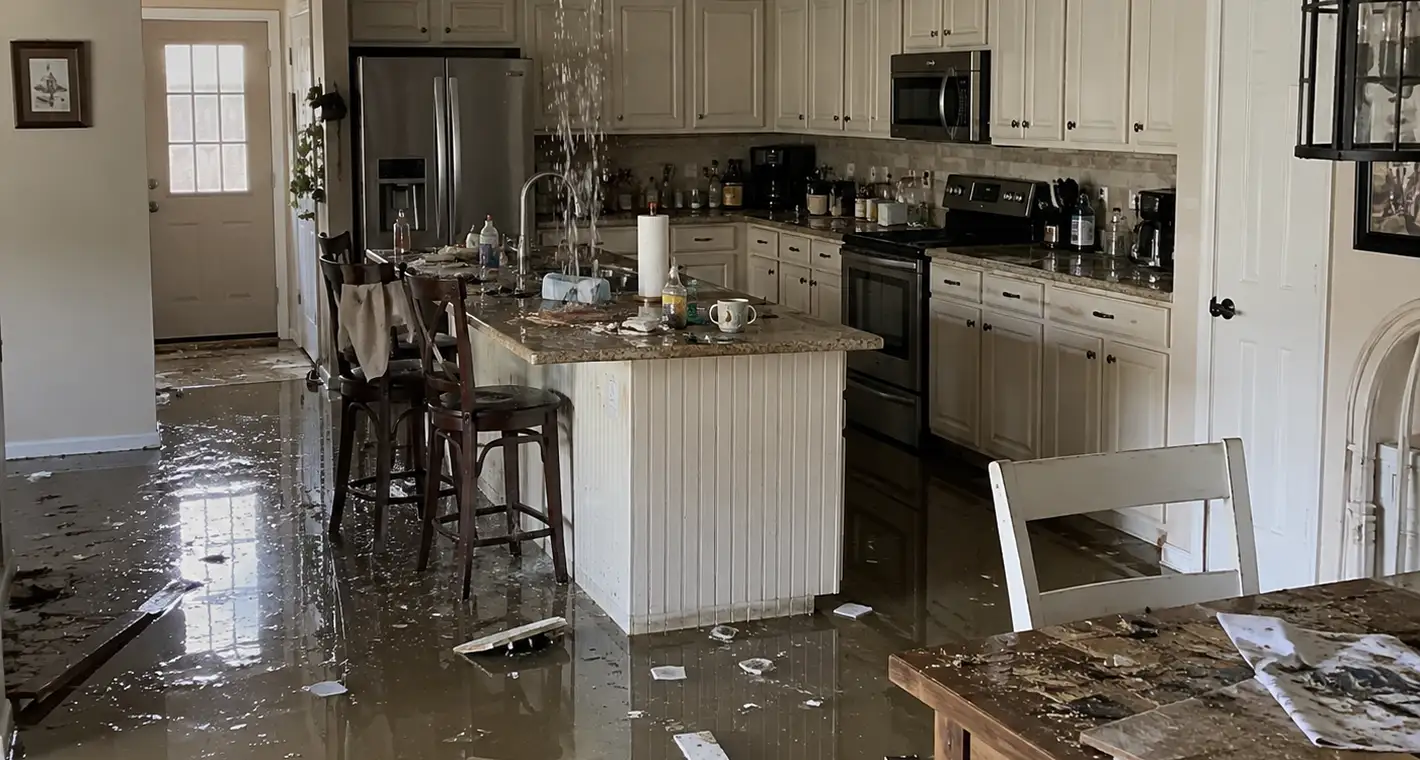
Why slab leaks turn up across the Conejo Valley
Practically everything built in this valley sits on a slab poured directly on the ground. Basements are not part of the building stock in Southern California, so supply plumbing that would run through a lower level elsewhere is cast into the concrete or buried under it. Whatever happens to that concrete over the years happens to the pipe inside it.
Two things work on it here. The first is the ground. Thousand Oaks is split roughly along Moorpark Road between volcanic rock on the west and marine shale across much of the east, and through much of the valley there are clay soils that swell through the wet season and shrink back over the long dry summer. On the hillside tracts a pad was made by cutting into the slope and filling out the other half, so a single slab can bear on native ground at one corner and engineered fill at another. A slab riding that unevenly works the lines running through it.
The second is age. The tracts that built this valley went in between roughly 1960 and 1980, which puts their original copper at fifty to sixty-five years in the ground. The result owes more to the ground and to the calendar than to anything the household has done.
What a slab leak looks like from inside the house
A slab leak rarely announces itself the way a burst line does. The water saturates the fill under the concrete first and only then surfaces through a crack, a joint or the slab edge, so by the time anything is visible it has usually been running for weeks.
- A damp patch of carpet, tile or plank flooring with no fixture above it
- A section of floor that feels warm underfoot, which points to a hot supply line
- The water meter still turning with every fixture in the house closed
- A water bill that climbed with no change in household use
- The sound of water running at night when nothing is on
- A musty room, or baseboard swelling along its bottom edge
On the acreage out in Santa Rosa Valley and around Hidden Valley there is no municipal meter and no bill to notice. What shows instead is a well pump that cycles far more than it should, and that is the same signal.
Locating the leak before anything is opened
The floor is not opened to look for the leak. It is opened once the leak has been found. The sequence runs: isolate the supply system and confirm the loss is on a pressurised line rather than a drain; pressure test hot and cold separately; then work acoustic listening equipment across the floor to pick up water escaping under the concrete, with thermal imaging showing where a hot line is warming the slab. Drain failures hold no pressure, so they leak only while the fixture above runs.
Repair in place or reroute overhead
Once the location is known there are two routes. The slab can be opened at that point: flooring lifted, concrete cut out, the pipe repaired, then the slab patched and the floor reinstated. That suits a system that is otherwise sound.
Alternatively the failed run is abandoned in place and a new line installed overhead, up a wall, across the attic and back down to the fixture. The concrete is never opened. The trade is that it puts one more water line above a finished ceiling, in the part of the house where a failure is discovered last.
Drying a slab after the leak is stopped
Stopping the leak does not dry the house. Concrete takes on water and gives it back slowly, and the fill beneath the slab can hold a great deal that keeps migrating upward long after the pipe is fixed. Clay makes that worse: it does not let water drain away downward, so the water stays in the fill and travels sideways instead. A floating plank floor then lets it spread underneath while the surface stays convincingly dry underfoot.
Drying a slab loss therefore runs longer than the same volume of clean water in a house with a wood floor structure, and the dry summer air this valley is known for does nothing at all for water sealed under a floor. Wall bases are checked with a meter rather than by eye, because water crossing a slab enters the wall at the tack strip and climbs into the drywall from below. Material too wet to dry in place comes out instead: carpet padding almost always, the bottom band of drywall often.
Slab leak water damage by city
- Thousand OaksZIP 91360, 91362, 91358
- Newbury ParkZIP 91320
- CalabasasZIP 91302
- Agoura HillsZIP 91301
- Oak ParkZIP 91377
- Westlake VillageZIP 91361
- Casa ConejoZIP 91320
- Santa Rosa ValleyZIP 93012
- Lake SherwoodZIP 91361
Frequently Asked Questions
- How do I know it is a slab leak and not something else?
- The pattern is distinctive. Water shows at floor level with no fixture above it, usually as a damp patch that returns after you dry it, and the floor may feel warm if a hot line is involved. The water meter keeps moving with every fixture shut. A roof leak or an attic condensate line stains a ceiling and comes down from above; a slab leak stays at the floor and does not care what the weather is doing.
- Does the concrete have to be broken up?
- Not always. Once the leak is located there are two routes: open the slab at that point and repair the pipe, or abandon the failed run and install a new line overhead through the attic and back down the walls. Rerouting leaves the concrete intact and is frequently chosen where the plumbing is old enough that another failure somewhere along it is a reasonable expectation.
- How is a leak found under concrete without digging for it?
- The location is narrowed down before anything is opened. The supply system is isolated to confirm the loss is on a pressurised line rather than a drain, hot and cold are tested separately, and then acoustic equipment picks up the sound of water escaping under the concrete while thermal imaging shows where a hot line is warming the slab. The floor is opened after that, at a known point.
- Is a slab leak covered by homeowners insurance?
- Policies commonly cover the sudden and accidental escape of water and the damage that follows, and many also cover access to the pipe, meaning the concrete that has to be broken and replaced. Frequently excluded are the failed pipe itself and damage that developed gradually. Because slab leaks often run undetected, how long it was leaking comes up.
- Does water pressure have anything to do with how often these happen?
- It does, and it is worth checking on any house here. The valley climbs several hundred feet, so a water system serving it runs pressure zones that leave houses at the bottom of a zone carrying considerably more static pressure than those above them. California plumbing code calls for a regulator above eighty psi, and that regulator is a wearing part. Once it drifts, everything downstream of it, including copper already thinned by sixty years in concrete, is working harder than it was designed to.